See Yourself at LSU New Orleans
Anchored between Lake Pontchartrain and one of the most remarkable cities in the world is a university with strong academic programs, real careers, and people who show up for each other. LSU New Orleans is where Privateers make their mark.


What it means to be a Privateer
You don't have to choose between a school that knows your name and one that opens doors. LSU New Orleans offers the access and affordability to get you here, the support to keep you moving, and the LSU network to take you further. This is where opportunity gets personal.

College of Liberal Arts and Education
Where better to study jazz than New Orleans? This LSU New Orleans specialized program is celebrated for distinction in teaching.

Henry Bernstein College of Business Administration
Our school offers one of the best known bachelor's and master's
degrees in Hotel, Restaurant and Tourism Administration.

Dr. Robert A. Savoie College of Engineering
We take our place among the best Naval Architecture and Marine Engineering programs in the world.

College of Sciences
Home to programs in the biological, physical, environmental, and mathematical sciences. Students gain knowledge and practical experience through laboratory work, research and hands-on learning.

Come and see
Plan a visit to LSU New Orleans and see for yourself what belonging to this community feels like.
News from campus
LSU New Orleans faculty, students, and alumni are making an impact across research, culture, and community. Stay current with the stories shaping university life and beyond.
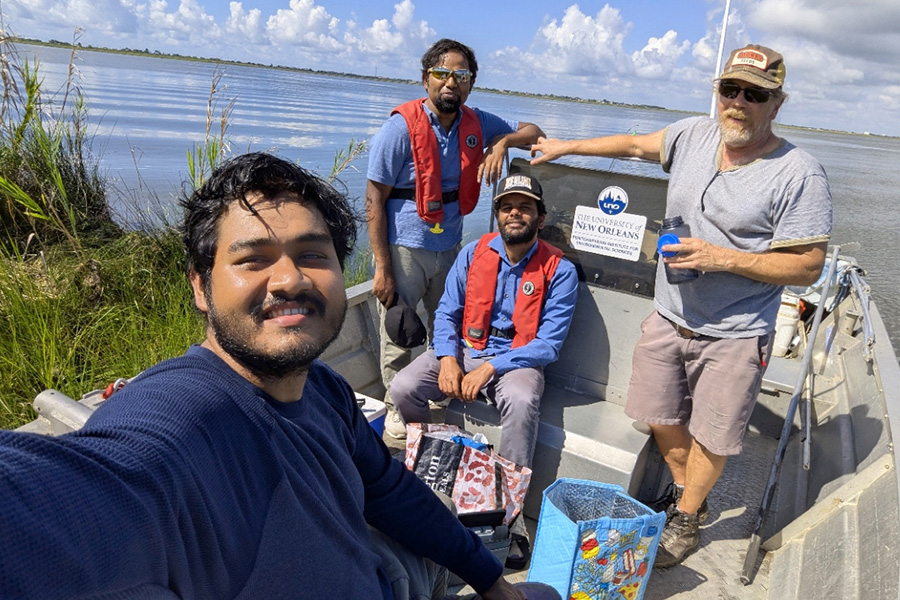
Computer Science Professor Dr. Abdullah Al Redwan Newaz Awarded NSF and LBRN Funding for Robotics Research
Dr. Abdullah Al Redwan Newaz, assistant professor in the Department of Computer Science at LSU New Orleans and director of the Autonomous Intelligent Robotics (AiR) Lab, has been awarded funding for two research projects that use robotics and artificial intelligence to address a shared challenge: how autonomous systems make decisions under uncertainty. The projects focus on water quality monitoring and robot-assisted therapy for children with autism spectrum disorder.
The first project, “ERI: AQUABOT: Advancing Water Quality Monitoring with an Intelligent Bot via Integrated Learning and Decision-Making,” received an award from the National Science Foundation and will run from August 2026 through April 2027.
The research focuses on improving how water quality is monitored across Louisiana’s coastal waters. Traditional monitoring relies on crews traveling by boat to collect samples at predetermined locations. While effective, the approach is costly and time-consuming and captures only a limited snapshot of conditions across large bodies of water.
Dr. Newaz’s team will develop an autonomous boat capable of determining where it should collect its next water sample based on what it has already learned. As the boat moves through the water, it will use its measurements to build a continuously updated map of water quality, identify areas where that map is least certain and navigate to those locations for additional sampling.
The key idea is to combine two tasks that are usually handled separately: learning from water-quality measurements and deciding where to measure next. Rather than following routes planned in advance, AQUABOT will adapt its route in real time based on the information it gathers.
Dr. Newaz will also receive funding for the project “Next Generation Multirobot Applied Behavior Analysis Therapy for Children with Autism Spectrum Disorder” from the Louisiana Biomedical Research Network (LBRN) at LSU, which is supported by the National Institutes of Health. The project will also run from August 2026 through April 2027.
The project brings together researchers from multiple disciplines to explore how social robots can help expand access to applied behavior analysis (ABA) therapy. ABA is widely used to support children with autism, but access is limited because treatment typically requires one-on-one sessions with trained therapists. The cost and scarcity of those services can create long waits for families seeking care.
Dr. Newaz and his collaborators will develop social robots designed to engage children ages 3 to 12 in interactive activities focused on skills such as turn-taking, joint attention and storytelling. The activities will incorporate core components of ABA therapy while allowing the robots to adjust difficulty in response to each child. Researchers will use standardized cognitive and behavioral assessments to measure changes over the course of the study.
The robots are not intended to replace therapists. Instead, the team envisions the technology as a way to extend the reach of clinicians, giving children additional opportunities to practice skills between appointments and in settings such as homes and schools.
Dr. Newaz is joined on the project by co-principal investigators Dr. Md Tamjidul Hoque, Dr. James Wagner, Dr. Ben Samuel and Dr. Elliott Beaton.
Together, the projects advance research at the intersection of robotics, artificial intelligence and real-world applications, with potential benefits for communities across Louisiana and beyond.
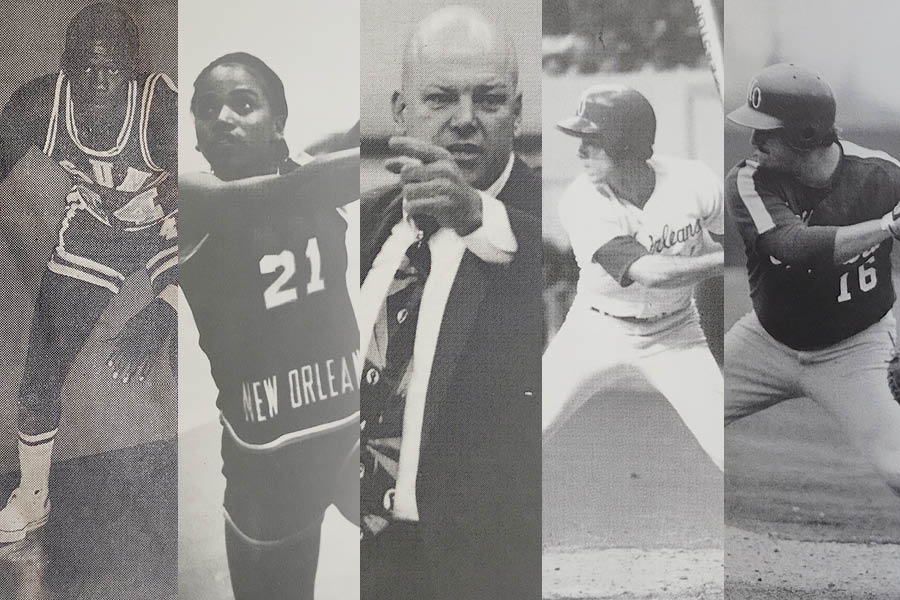
2026 Privateers Hall of Fame Class to Be Honored on Homecoming Weekend
Five standout figures in Privateer athletics history will be inducted into the LSU New Orleans Athletics Hall of Fame during Homecoming Weekend. The 2026 class includes Joey Favaloro, Carmen Reedscott, Brian Traxler, Xavier “Butch” Webster and Ted Wood.
Webster, who played basketball from 1969-71, became the program’s first All-American and remains the school record holder in both points per game (25.2) and rebounds per game (12.5). As a senior, he helped lead the Privateers to a 23-5 record and a No. 1 ranking in the final NCAA Division II AP Poll. Webster was selected by the Buffalo Braves in the 1971 NBA Draft.
Wood and Traxler, teammates from 1986-88, left their marks throughout the Privateer baseball record book. Wood still holds the program records for career batting average (.380) and runs scored (230). He also won a gold medal with Team USA at the 1988 Summer Olympics and was selected by the San Francisco Giants in the first round of the 1988 MLB Draft.
Traxler remains the program’s career home run leader with 49 and ranks second in career RBI with 206. He was selected by the Los Angeles Dodgers in the 1988 MLB Draft and made his Major League debut with the Dodgers in 1990.
Reedscott was a two-time All-American with the women’s basketball program, earning honors in both 1984-85 and 1985-86. She scored 1,189 points and collected 665 rebounds during her Privateer career and continues to hold the program record for career field goal percentage with a minimum of 200 attempts at 55.9 percent.
Favaloro led the women’s basketball program for 24 seasons and holds the program record with 382 coaching wins. His teams captured the 1983 Women’s NIT championship, made the program’s first NCAA Tournament appearance in 1986 and recorded seven 20-win seasons.
The 2026 Privateer Athletics Hall of Fame ceremony will take place Friday, Nov. 6, at the Homer Hitt Alumni Center as part of Homecoming Weekend. The reception begins at 6 p.m., followed by the program at 7 p.m. Tickets are $50.
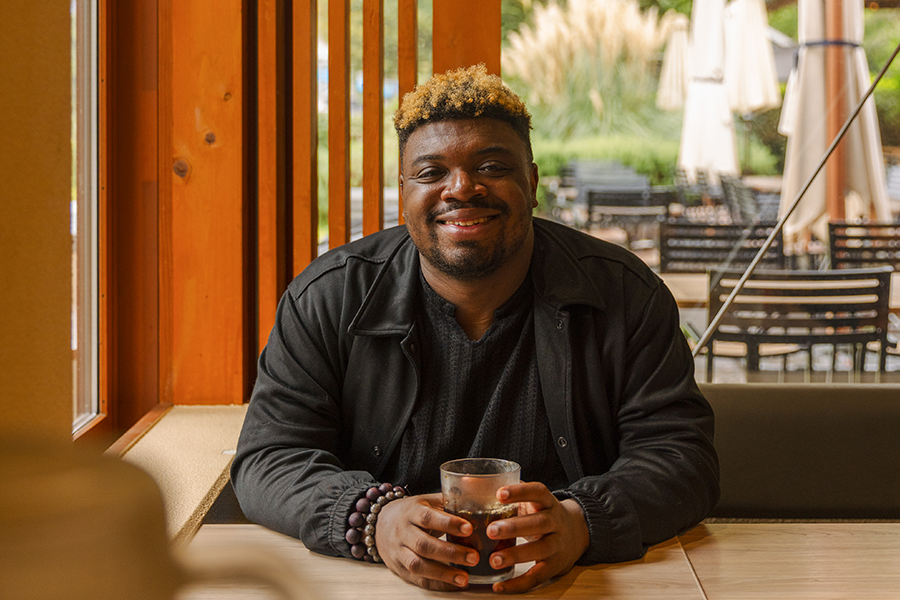
Creative Writing Alumnus Bryan Washington Named 2026 MacArthur Fellow
LSU New Orleans Creative Writing Workshop alumnus Bryan Washington has been named a 2026 MacArthur Fellow, one of the nation’s most prestigious honors recognizing exceptional creativity.
Washington, who earned his MFA from the University of New Orleans in 2018, is a fiction writer known for stories exploring relationships, family, place and everyday life. His books include the short story collection Lot and the novels Memorial, Family Meal and Palaver. His writing has also appeared in The New Yorker, The New York Times Magazine and Granta.
Often referred to as a “genius grant,” the MacArthur Fellowship recognizes individuals who have demonstrated exceptional creativity and the potential for significant future work. Fellows do not apply for the award and receive $800,000 in unrestricted funding over five years, allowing them to pursue their creative work without specific requirements.
Washington is one of the 2026 MacArthur Fellows selected from across a wide range of fields in the arts, sciences and humanities.
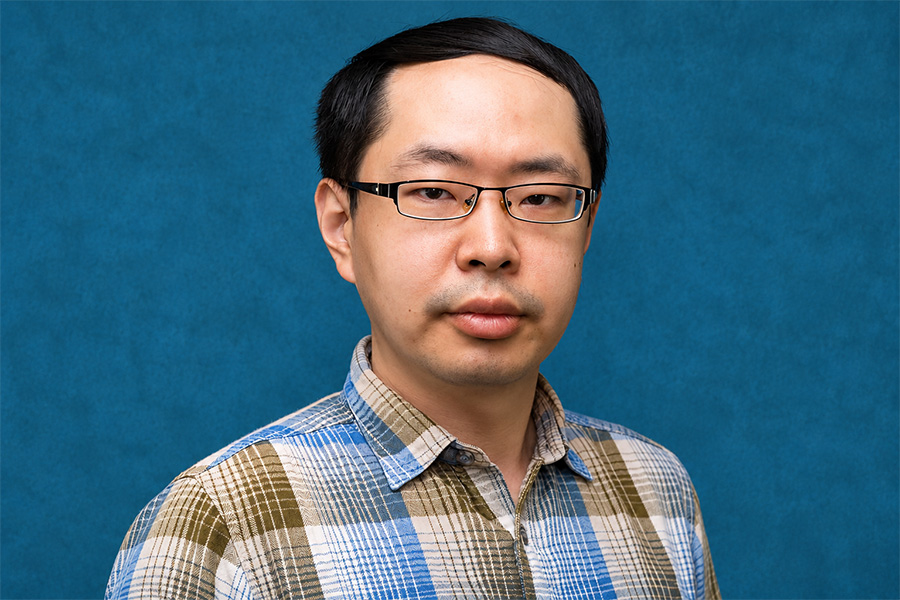
Exploring the Connection Between Reproduction and Healthy Aging
Cheng Shi, Ph.D., received a five-year, $1,862,500 award through the R35 “Maximizing Investigators’ Research” program for his project, “Investigating the role of lipid metabolism in germline-soma interactions and stress responses.” His research will explore how high levels of reproductive activity affect the health and lifespan of the rest of the body.
The research will focus on how the reproductive system communicates with the rest of the body, particularly through lipid metabolism, or how the body uses and stores fats. Dr. Shi hopes to fill an important gap in scientists’ understanding of how high reproductive activity affects overall health and whether changes in lipid metabolism could help the body meet increased reproductive demands while maintaining its health over time.
“This five-year grant gives us an incredible opportunity to investigate an area of biology that is still largely unexplored,” Dr. Shi said. “With the research facilities, students and collaborative environment at LSU New Orleans, we can study these connections at a much deeper level. Ultimately, we hope this work provides new insight into how reproductive health, metabolism and healthy aging are connected.”
Dr. Shi’s work reflects LSU New Orleans’ commitment to advancing research that addresses fundamental questions about health and aging. The grant will also create opportunities for students to participate in scientific research and gain hands-on experience while contributing to discoveries that could have an impact far beyond the laboratory.
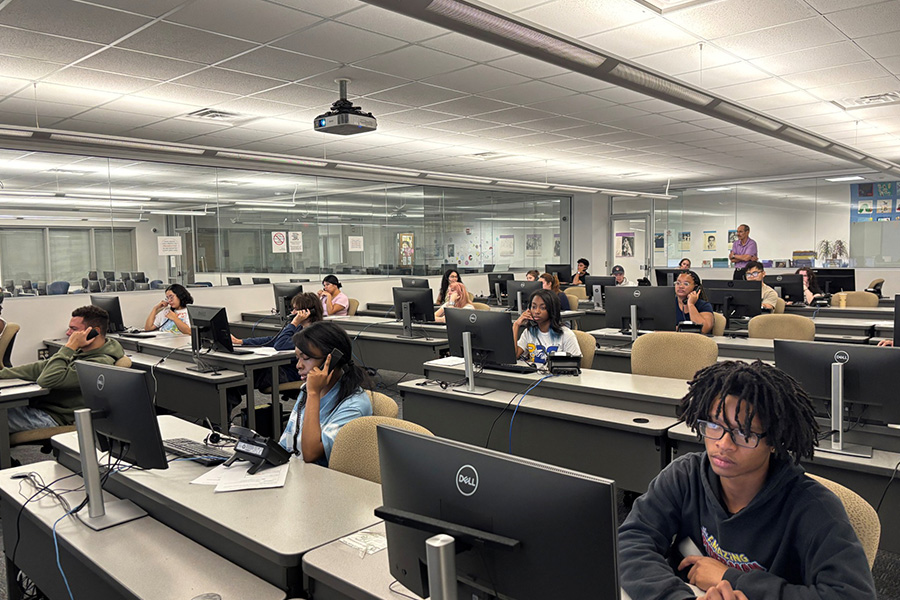
Quality of Life Survey Marks 40 Years of Listening to the New Orleans Community
For four decades, the LSU New Orleans Survey Research Center has been asking residents of Orleans and Jefferson parishes about the issues that shape their everyday lives. This year marks the 40th anniversary of the Quality of Life Survey, a longstanding effort to study and serve the surrounding community.
The telephone survey examines residents’ perceptions of quality of life in the two parishes, including their views on the economy, transportation and public safety. It also asks residents to evaluate local government services and officials, providing an opportunity for voters to share their perspectives between elections.
Because the survey is conducted regularly, researchers can track changes in public opinion over time and identify areas where residents believe government services are improving or may need more attention. The findings can also provide local government leaders with insight into the priorities and concerns of the communities they serve.
The project has an important educational component as well. More than 1,000 LSU New Orleans students have served as survey interviewers over the years, gaining hands-on experience conducting community-based research. Undergraduate and graduate students learn how scientific surveys are conducted, how data are collected and how public opinion research can provide a better understanding of the electorate.
This year’s interviews concluded Sept. 30, marking another chapter in a 40-year tradition of connecting LSU New Orleans research and students with the Greater New Orleans community.

Horror Studies Badge Brings the Macabre Into the Classroom
From vampires and ghosts to monsters, magic and folklore, New Orleans has long been associated with the supernatural. Beginning in October 2026, LSU New Orleans students can explore those connections through the new Horror Studies Badge.
The badge recognizes undergraduate students who demonstrate an interest in the macabre, the culture of New Orleans and the study of horror across literature, folklore and other creative works.
To earn the badge, students complete two courses and two related activities. Course options explore everything from vampire literature and ghost stories to werewolves, monsters, witches and folklore. Activities give students opportunities to take those interests beyond the classroom and experience the connections between horror and New Orleans culture firsthand.
Sample Courses
Courses that may count toward the Horror Studies Badge include Vampire Literature, Ghost Stories, Monsters and the Monstrous, Werewolves, Crafting the Witch, Women’s Vampire Literature, When Yokai Attack, Methods and Research: Vampires, Folklore, Horror in the Long 19th Century, Monsters, Horror and Crafting the Witch.
Independent research opportunities focusing on vampires or folklore may also be available as part of the course options.
Sample Activities
Students can fulfill the activity portion of the badge through experiences such as taking a ghost or vampire tour of the French Quarter, visiting a haunted landmark, attending a reading of applicable critical research or creative work, attending a play in the horror genre or attending a campus screening of a horror film.
The Horror Studies Badge gives students an opportunity to approach the supernatural through critical inquiry while making connections between their coursework and the history and culture of New Orleans.
The badge is not a degree and is available to LSU New Orleans undergraduate students. Students interested in participating can contact Dr. Robin Werner at [email protected] for more information.
What students say
Hear it straight from our community. Here’s what’s special about LSU New Orleans.


See yourself
here this fall
LSU New Orleans puts you in the middle of one of the most culturally alive cities in the country, with small classes and faculty who know your name. Tuition stays among the most affordable in the region, so your degree works for you from day one.
The numbers behind the story
An affordable education shouldn't be out of reach. At LSU New Orleans, nine out of ten incoming full-time students receive some form of financial assistance, and across all undergraduates, more than $41 million in financial aid and scholarships is awarded every year. On average, students who receive grants or scholarships get nearly $10,000 toward their education, putting a quality degree within reach.


90% of our students are employed two years after graduation according to Niche.com. LSU New Orleans has been ranked top in the state in lowest student debt and number one in Louisiana in highest early career salaries.
LSU New Orleans emerged as a public research institution committed to making higher education accessible to the region. The university developed strong academic programs while celebrating the city's distinctive cultural traditions, becoming a vital pathway for economic opportunity and regional prosperity.
Take the first steps towards LSU New Orleans.
Whether you're a first-time freshman, transfer student, or picking up where you left off, we've made the path clear. Here's how to move forward.
Got questions? We’ve got answers.
Find what you need from application steps to financial aid and everything in between.
Ask us directly
Chat with our bot for quick answers. Humans trained it, and humans are still available at LSU New Orleans to help answer questions if you can’t find them here.
LSU New Orleans sits on the scenic shores of Lake Pontchartrain at 2000 Lakeshore Drive in New Orleans, LA 70148. You can take a virtual tour from home or schedule an in-person visit to experience the campus for yourself. View the campus map for a full layout and directions.
LSU New Orleans is consistently ranked among the nation's most affordable universities. Tuition varies based on residency status and credit hours. For a full breakdown of current rates and an estimated cost of attendance, visit the Tuition and Fees page.
LSU New Orleans offers a wide range of undergraduate, graduate, and doctoral programs across multiple colleges. Whether you're exploring a specific major or just getting started, browse all programs of study to find the right fit.
Applying is straightforward: submit your application online, send official transcripts, and check your portal for your admission status. Visit the Apply page to get started.
Yes. On-campus housing is available in a variety of room types, so there's likely an option that fits your needs and budget. Spots fill up quickly, so it's worth applying early. Explore housing options and apply at The Office of Residential Life.
