Programs
The bachelor's degree is a strong start to a career in the maritime industry, and the school offers master's and doctoral study too. Each program has its own page with admission details and a link to its requirements in the course catalog.

Naval Architecture and Marine Engineering B.S.
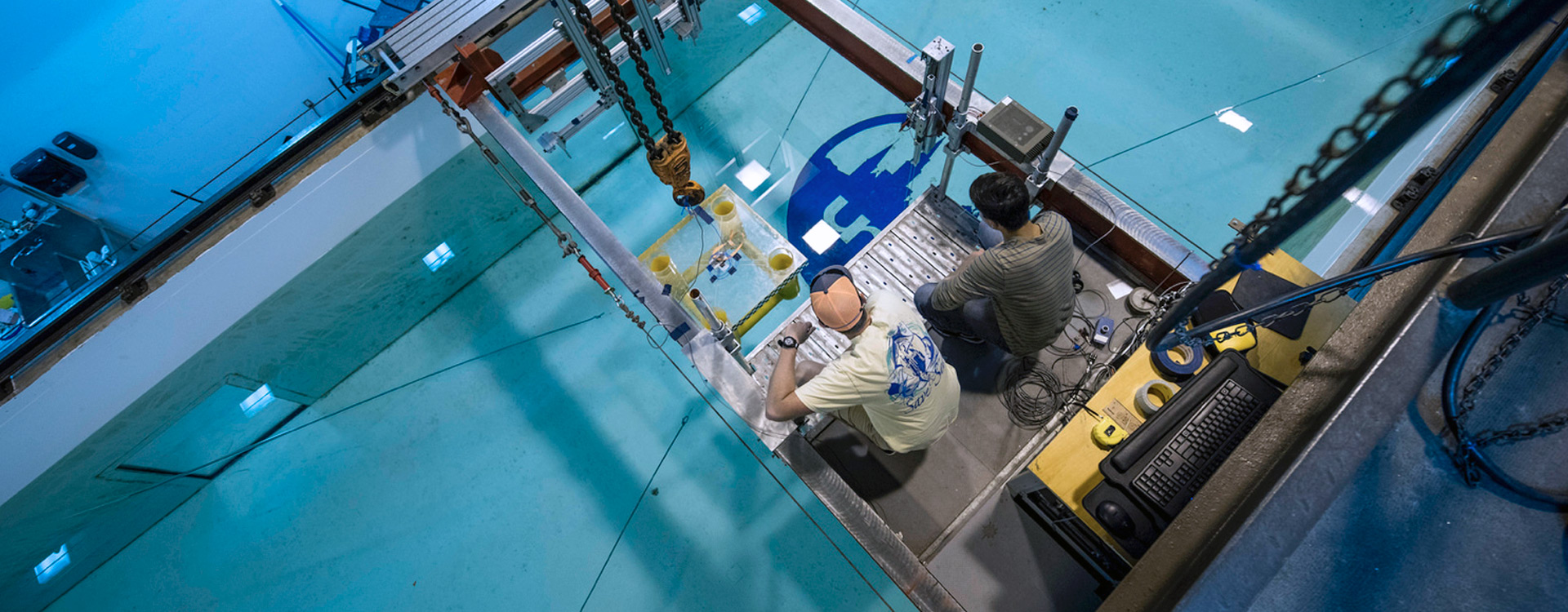
ABET-accredited, with a 128-foot towing tank for model tests.
Engineering M.S., naval architecture and marine engineering concentration
Graduate
Advanced study with classes after work hours, full or part time.
Engineering and Applied Science Ph.D.
Doctoral research across engineering and the sciences.
Learn about accelerated master's programs
The Gulf Coast's shipyards and engineering companies, along with its naval and ocean research labs, give graduate students real chances to move ahead in their careers. Engineering undergraduates can start the master's early through the accelerated master's program, which the Graduate School runs.
Apply and next steps
Not sure how to start? Here's the path, and the offices you may need along the way.
Undergraduate applicants
First-time and transfer students apply through Undergraduate Admissions. If you're transferring or returning, you can request a credit evaluation.
Graduate applicants
Master's and doctoral applicants apply through the Graduate School.
Already have a degree and want undergraduate courses for a pre-professional track? Apply as a non-degree-seeking undergraduate.
Offices you may need
Faculty

Pay in-state tuition through the Academic Common Market
Only a few universities in the United States offer naval architecture and marine engineering. If your home state doesn't, you may be able to pay in-state tuition here through the Academic Common Market.
The Southern Regional Education Board (SREB) runs the Academic Common Market. Residents of these states have been able to pay in-state tuition for the B.S. in Naval Architecture and Marine Engineering:
- Alabama
- Arkansas
- Delaware
- Georgia
- Kentucky
- Maryland
- Mississippi
- Oklahoma
- South Carolina
- Tennessee
- Virginia
Florida residents can use the Academic Common Market for the graduate program only.
States join and leave the program, so check the SREB website for the current list. If your state isn't listed, contact your state's SREB representative.
Labs and facilities
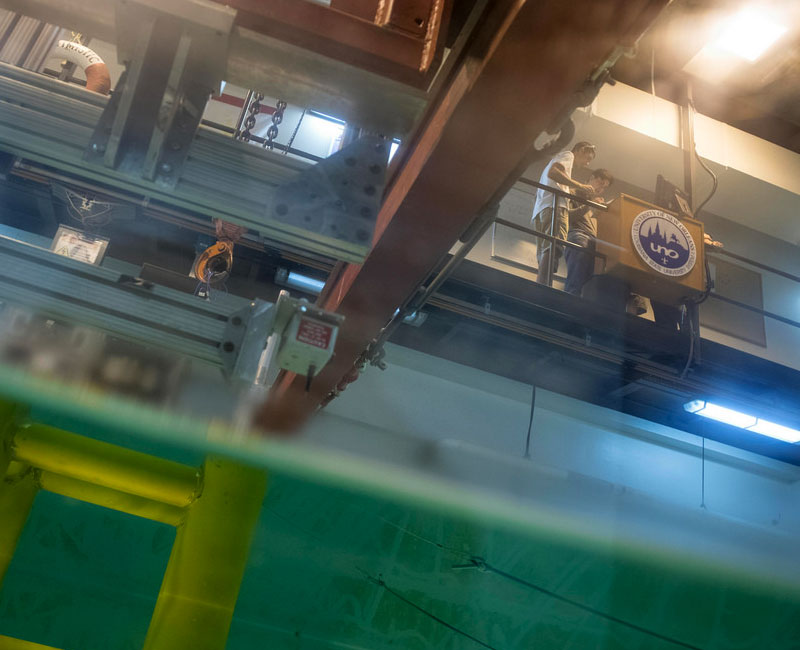
The school's labs are in the Engineering Building:
- A 128-foot towing tank with a 15-by-7-foot cross section, for testing 8- to 12-foot models of ships and offshore structures in calm water, waves and currents
- A model shop for projects and towing tank models
- A structural test frame with computer-controlled actuators for testing aluminum, steel and composite ship parts
- A ship design lab with the software the maritime industry uses for hull design, hydrostatics, stability, structural analysis, resistance, propulsion and seakeeping predictions
- A rapid prototyping lab with a laser cutter and 3D printers to turn designs into models
- A marine engineering lab for ship safety, operations, maintenance and propulsion simulation
The towing tank is the college's largest test facility. Students and faculty use it for classes and research, and the school's staff and faculty run model tests for the maritime industry.
Towing tank specifications (PDF)
The ship design lab is open to naval architecture and marine engineering students 24 hours a day.
Student organizations
Society of Naval Architects and Marine Engineers (SNAME)
The student section links you to working professionals in the maritime industry. It hosts social events, speakers from industry, recruiting events and boat-building contests.
Solar and electric boat team
Since 1996, students have built and raced solar-powered boats at Solar Splash, the world championship of college solar and electric boat racing. The team has won several awards and sprint world championships.
The team welcomes students from every engineering major:
- Electrical engineers help build the solar power system
- Mechanical engineers help design and build the drive train
- Naval architects design the hull and propeller
Companies can support the team with funds, equipment or services. Contact the school to sponsor the team.
About the school
The school's mission is to educate engineers for the maritime industry and to advance naval architecture and marine engineering through teaching and research. The school keeps close ties with the local and national marine industry.
Support the school
The school's endowment fund supports student scholarships and projects. It also helps pay for lab equipment. To give, visit the college's donation page and choose Naval Architecture and Marine Engineering. Add "for endowment" in the comments.