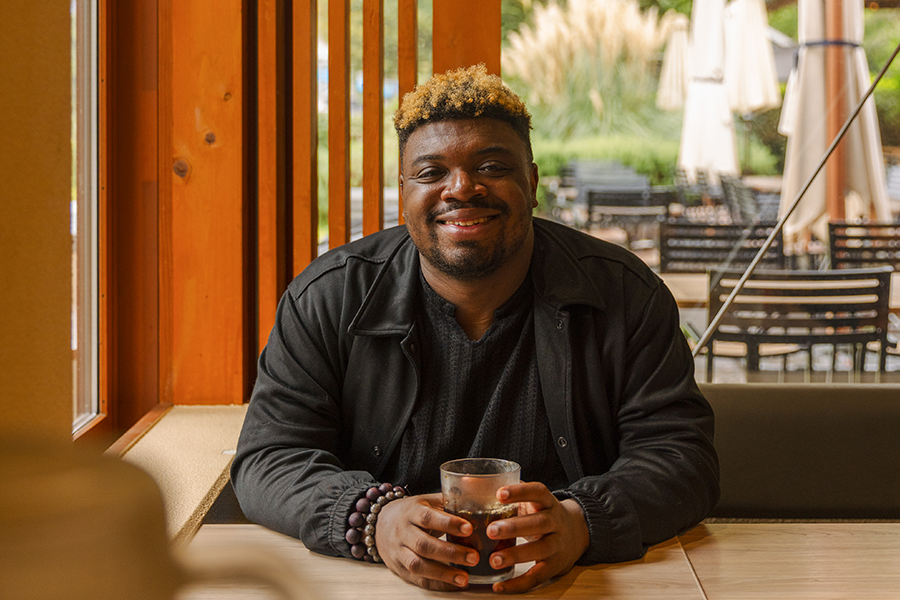


Dr. Abdullah Al Redwan Newaz, assistant professor in the Department of Computer Science at LSU New Orleans and director of the Autonomous Intelligent Robotics (AiR) Lab, has been awarded funding for two research projects that use robotics and artificial intelligence to address a shared challenge: how autonomous systems make decisions under uncertainty. The projects focus on water quality monitoring and robot-assisted therapy for children with autism spectrum disorder.
The first project, “ERI: AQUABOT: Advancing Water Quality Monitoring with an Intelligent Bot via Integrated Learning and Decision-Making,” received an award from the National Science Foundation and will run from August 2026 through April 2027.
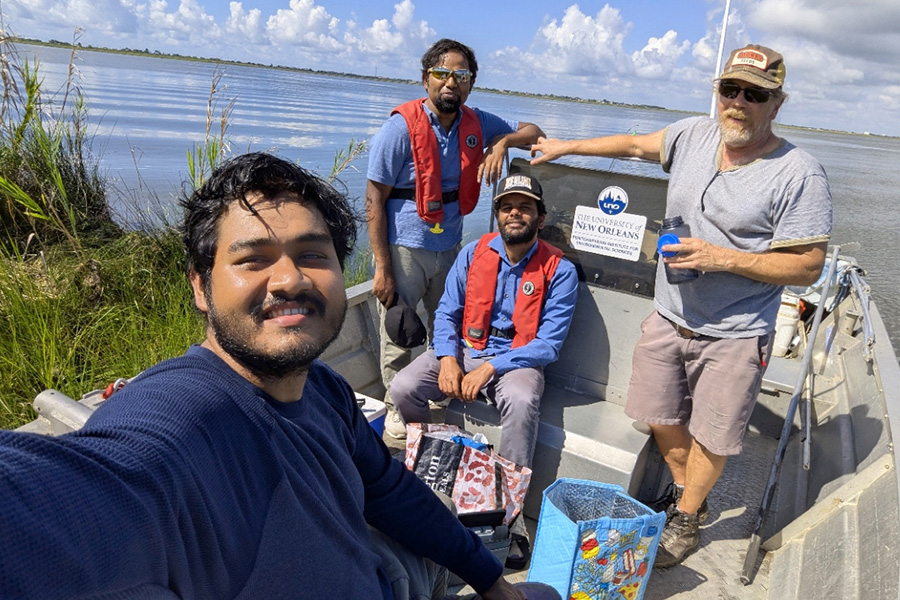
The research focuses on improving how water quality is monitored across Louisiana’s coastal waters. Traditional monitoring relies on crews traveling by boat to collect samples at predetermined locations. While effective, the approach is costly and time-consuming and captures only a limited snapshot of conditions across large bodies of water.
Dr. Newaz’s team will develop an autonomous boat capable of determining where it should collect its next water sample based on what it has already learned. As the boat moves through the water, it will use its measurements to build a continuously updated map of water quality, identify areas where that map is least certain and navigate to those locations for additional sampling.
The key idea is to combine two tasks that are usually handled separately: learning from water-quality measurements and deciding where to measure next. Rather than following routes planned in advance, AQUABOT will adapt its route in real time based on the information it gathers.
Dr. Newaz will also receive funding for the project “Next Generation Multirobot Applied Behavior Analysis Therapy for Children with Autism Spectrum Disorder” from the Louisiana Biomedical Research Network (LBRN) at LSU, which is supported by the National Institutes of Health. The project will also run from August 2026 through April 2027.
The project brings together researchers from multiple disciplines to explore how social robots can help expand access to applied behavior analysis (ABA) therapy. ABA is widely used to support children with autism, but access is limited because treatment typically requires one-on-one sessions with trained therapists. The cost and scarcity of those services can create long waits for families seeking care.
Dr. Newaz and his collaborators will develop social robots designed to engage children ages 3 to 12 in interactive activities focused on skills such as turn-taking, joint attention and storytelling. The activities will incorporate core components of ABA therapy while allowing the robots to adjust difficulty in response to each child. Researchers will use standardized cognitive and behavioral assessments to measure changes over the course of the study.
The robots are not intended to replace therapists. Instead, the team envisions the technology as a way to extend the reach of clinicians, giving children additional opportunities to practice skills between appointments and in settings such as homes and schools.
Dr. Newaz is joined on the project by co-principal investigators Dr. Md Tamjidul Hoque, Dr. James Wagner, Dr. Ben Samuel and Dr. Elliott Beaton.
Together, the projects advance research at the intersection of robotics, artificial intelligence and real-world applications, with potential benefits for communities across Louisiana and beyond.